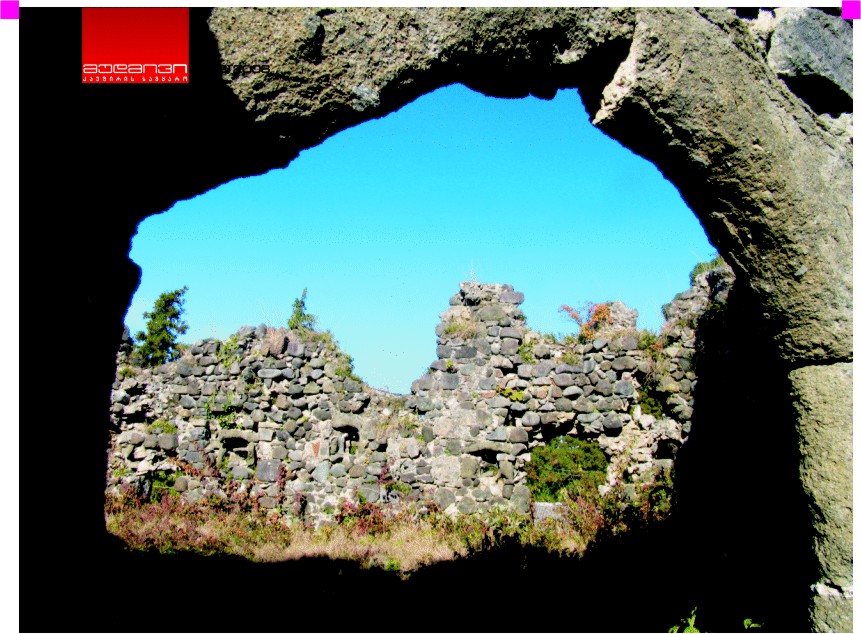
It was Heinrich Schliemann, famous researcher of Greek antiquities and an excavator of Troy, who, in
the
late
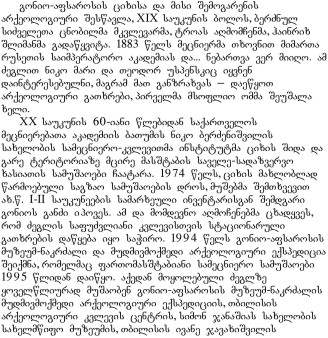
19th century,, decided to explore thoroughly the Gonio-Apsarus Fort and its surroundings. In 1883 the researcher appealed to the Russian Imperial Academy for permission but … he was refused. This monument later attracted the attention of Niko Marr and Theodor Uspensky but their firm determination to launch archaeological excavations was undercut by the First World War.
In the
1960s, the Batumi Niko Berdzenishvili Research Institute under the Georgian Academy of Sciences carried out small-scale surveillance and field works both within and outside the fort territory. In 1974 workers engaged in road works in the vicinity of the fort unearthed the so-called Gonio treasure made up largely of burial items dating from the 1st and 2nd centuries. This and ensuing discoveries made it clear that excavations were needed for a thorough exploration of the monument. In 1994
the Gonio-Apsarus
Museum and Sanctuary and permanent archaeological expedition were set up. In 1995 the archaeological expedition embarked on large-scale research works. Since then the monument has been under the study of researchers from the permanent archaeological expedition, the Gonio-Apsarus museum and Sanctuary, Tbilisi Archaeological Research Centre, Simon Janashia State Museum and Tbilisi Ivane Javakhishvili State University. In 1999-2001, funds allocated by the German Research Association and the German Academic Exchange Service (DAAD) enabled the Classical Archaeology Chair of the Friedrich Schiller University to engage actively in the exploration of the monument. The main aim of these joint efforts was to study