


Page 73 - 108-4-2025
P. 73
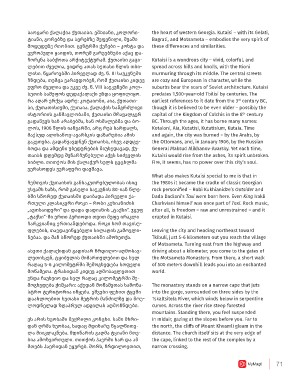
საოცარი ქალაქ ია ქუთ აი ს ი. ეშ ხია ნ ი, კოლ ორ ი the heart of western Georgia. Kutaisi – with its Gelati,
ტია ნი, გორებზე და სერ ებზე შეფ ენ ილ ი, შუა შ ი Bagrati, and Motsameta – embodies the very spirit of
მოდუდ უნე რიონით. ცენ ტ რშ ი ქუჩები – კოხ ტ ა და these differences and similarities.
ევრ ოპულ ი ყაი დ ის, თორ ემ გარ ეუბნები აქ აც და
ჩორკნა საბ ჭ ოთა არქ იტ ექტ ურ ამ. ქუთ აი სი გაც ი Kutaisi is a wondrous city – vivid, colorful, and
ლებით ძველია, ვიდ რ ე ათასხუთ ას ი წლ ის თბი spread across hills and knolls, with the Rioni
ლის ი. წყაროებ ში პირ ველ ად ძვ. წ. III საუკუნეშ ი murmuring through its middle. The central streets
ჩნდებ ა, თუმ ც ა ვარაუ დ ობ ენ, რომ ქუთ აის ი კიდევ are cozy and European in character, while the
უფრო ძველ ია და უკვ ე ძვ. წ. VIII საუ კუნეში კოლ suburbs bear the scars of Soviet architecture. Kutaisi
ხეთის სამეფ ოს დედ აქალაქ ი უნ დ ა ყოფილიყო. predates 1,500-year-old Tbilisi by centuries. The
რა აღ არ ერ ქვ ა ად რე: კოტაიო ნ ი, აი ა, ქუთ ათ ი earliest references to it date from the 3rd century BC,
სი, ქუთ ათისიუ მ ი, ქუთ აია . ქალაქ ის ხან გრ ძ ლ ივი though it is believed to be even older – possibly the
ის ტ ორ იის გან მავ ლ ობაშ ი, ქუთ აისი მრ ავალ ჯ ერ capital of the Kingdom of Colchis in the 8th century
გადაწვ ეს ხან არ აბ ებმა, ხან ოს მალებმა და ბო BC. Through the ages, it has borne many names:
ლოს, 1906 წლ ის ია ნვარში, არც რუს სარ დ ალს, Kotaioni, Aia, Kutatisi, Kutatisium, Kutaia. Time
მაქსუდ ალიხ ან ოვ-ავარ სკის დაზ არ ებ ია ამ ის and again, the city was burned – by the Arabs, by
გაკ ეთება. გად აწ ვავ დნ ენ ქუთ აის ს, ის ევ აღდგ ე the Ottomans, and, in January 1906, by the Russian
ბოდ ა და ამდენ ი უბ ედ ურების მიუ ხ ედ ავად, ქუ General Maksud Alikhanov-Avarsky. Yet each time,
თაის ს დღ ემდე შენარ ჩუნებ ულ ი აქ ვს სიძ ვ ელ ის Kutaisi would rise from the ashes, its spirit unbroken.
ხიბლი. თითქ ოს მის ქალ აქურ სულ ს ცეცხლმ ა Fire, it seems, has no power over this city’s soul.
ვერ ასოდ ეს ვერ აფერი დაუშ ავა.
What also makes Kutaisi special to me is that in
ჩემთვ ის ქუთ აი სის გან საკ უთ რებულ ობას ისიც the 1980s it became the cradle of classic Georgian
უსვამს ხაზს, რომ გასულ ი საუ კუნის 80-ია ნ წლე rock personified – Robi Kukhianidze’s Outsider and
ბშ ი სწორედ ქუთ აი ს შ ი დაი ბადა პირ ვ ელ ი ქა Dada Dadiani’s Taxi were born here. Even King Irakli
რთ ული კლასიკურ ი როკი – რობი კუხია ნიძ ის Charkviani himself was once part of Taxi. Rock music,
„აუთ ს აი დ ერი“ და დადა დადიან ის „ტაქ სი“. ჯგ უფ after all, is freedom – raw and unrestrained – and it
„ტაქსი“-ში ერთი პერიო დი თვ ით მეფ ე ირ აკლი erupted in Kutaisi.
ჩარკვიანიც ერ თ იანდ ებოდა. როკი ხომ თავ ის უ
ფლების, თავ დ ავ იწ ყებულ ი სილ აღ ის გამ ოვ ლი Leaving the city and heading northeast toward
ნებ აა . და მან სწორედ ქუთაი ს შ ი ამოხ ეთ ქა. Tkibuli, just 5-6 kilometers out you reach the village
of Motsameta. Turning east from the highway and
ასეთ ი ქალაქ იდან გადიხ არ ჩრდილ ო-აღმოს ავ driving about a kilometer, you come to the gates of
ლეთ ისკ ენ, ტყ იბულ ის მიმ არ თ ულ ებით და სულ the Motsameta Monastery. From there, a short walk
რაღაც 5-6 კილომ ეტ რში შემ ოგ ხვდ ება სოფ ელ ი of 500 meters downhill leads you into an enchanted
მოწამეთა. ტრ ას იდ ან კიდ ევ აღმოს ავლ ეთით world.
უნ დ ა ჩაუ ხვიო და სულ რაღ აც კილ ომეტ რში შე
მოგ ხ ვდ ება ჭიშკ არ ი: აქ ედან მოწ ამ ეთ ას სამონ ა The monastery stands on a narrow cape that juts
სტრ ო ტერიტ ორ ია იწყებ ა. ეშ ვები ფეხ ით ტყეში into the gorge, surrounded on three sides by the
დაახლ ოე ბით ხუთ ასი მეტ რის მან ძ ილ ზ ე და მოუ Tskaltsitela River, which winds below in serpentine
ლოდნელ ად ზღაპ რულ ად გილ ას აღ მ ოჩნდებ ი. curves. Across the river rise steep forested
mountains. Standing there, you feel suspended
ეს არ ის ხეო ბ აში შეჭრ ილი კონ ცხ ი. სამ ი მხ რ ი in midair, gazing at the slopes before you. Far to
დან ღრმა ხეო ბ აა, სად აც მდ ინ არე წყ ალწ ით ე the north, the cliffs of Mount Khvamli gleam in the
ლა მიი კ ლაკნებ ა. მდინარ ის გაღმ ა ტყია ნი მთე distance. The church itself sits at the very edge of
ბია ამ ოზვ ირთ ული. თით ქოს ჰაერ შ ი ხარ და ამ the cape, linked to the rest of the complex by a
მთებს ჰაე რ იდან უყურ ებ. შორ ს, ჩრდილ ოეთით, narrow crossing.
MyMagti 71

